As an Amazon Associate I earn from qualifying purchases. If you buy through a link on this page, Vanity Shelf may earn a small commission at no extra cost to you.
Natural and lab-grown diamonds are both real diamond, but they are not the same purchase. Here is how experts tell them apart, why natural diamonds are worth a fresh look this holiday season, and how to buy one with confidence.
Lab-grown diamonds: where they come from
China is the world’s largest producer of lab-grown diamonds, with most of its output made in Henan province using the high-pressure, high-temperature (HPHT) method. India is a major producer using chemical vapor deposition (CVD). Lab-grown stones are chemically and physically diamond. What differs is their origin, their growth history and, increasingly, their price.
How experts tell natural from lab-grown
- Growth patterns. Natural diamonds and lab diamonds grow in different shapes, so their internal growth patterns differ. According to GIA, these patterns are among the most reliable ways to separate them.
- Inclusions. Natural diamonds often hold tiny mineral crystals and “feathers” from deep in the Earth. HPHT lab stones can contain metallic flux inclusions; CVD stones can show layered growth or dark pinpoints.
- Instruments, not eyes. You cannot tell by eye, and flaws alone do not prove origin; some lab stones have inclusions and some natural stones are nearly flawless. Labs use spectroscopy, UV fluorescence imaging and screening devices such as GIA’s iD100.
- The report. The practical test for a buyer is a grading report from GIA or IGI that states “natural” or “laboratory-grown”.
Why natural diamonds are worth a look this Christmas
Natural diamond prices have softened. Industry figures for 2026 show rough-diamond prices sharply lower year over year and polished prices below their 2022 peak, with extra inventory sitting in the trade. De Beers cut its 2026 production guidance in response. For shoppers, that can mean better value on a natural stone than in recent years. Prices vary by size and quality, so compare carefully. This is shopping guidance, not investment advice.
Our natural diamond pick
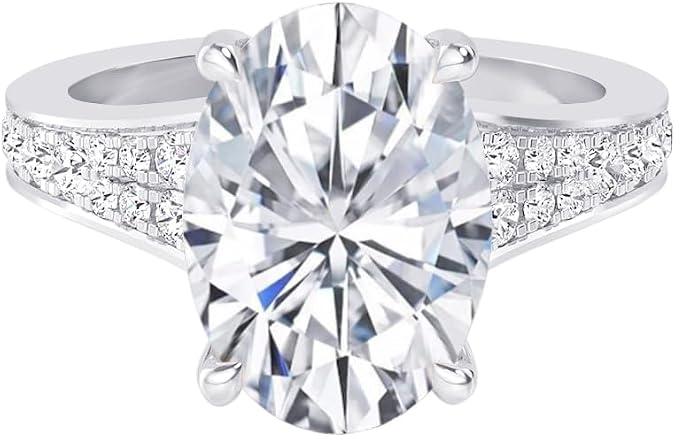
Oval Natural Diamond Engagement Ring, 14K Gold
An oval natural center diamond with diamond accents, offered in several carat sizes and in white or yellow gold. The listing also offers lab-grown versions, so check that the option you choose says “Natural”.
Check today’s price on Amazon →
Buying checklist
- Confirm the listing says natural, not lab-grown, simulated or moissanite.
- Ask for or check the grading report (GIA or IGI).
- Compare carat, color and clarity at the same price across options.
- Check the return policy before the holidays.
Sources: GIA: HPHT and CVD growth processes; GIA: identifying lab-grown diamonds; Antwerp diamond price data 2026; Sixth Tone: China’s diamond industry.
More from Vanity Shelf: Black Friday beauty gift guide.